More glass is not more light, and more light is not automatically better. Six ideas about daylight worth examining.
Daylight design in a hot climate is a balance between light and heat, and the two arrive together. Beliefs formed in cooler climates, or from photographs of buildings in them, produce houses that are bright, hot and expensive to cool.
How to test a claim like this
Test any daylight claim by asking what it does to heat gain in July at the relevant orientation. Light and heat are not separable, and a strategy that ignores one is a strategy for a different climate.
Myth 1: More glazing means a better lit house
Reality: Beyond a point, additional glazing adds glare and heat rather than useful light. Well-placed modest openings can light a room better than a large expanse facing the wrong direction.
How to check it yourself: Ask what daylight level each room needs for its use, and which orientation each opening faces.
Myth 2: South facing is always best
Reality: Orientation guidance from cooler climates does not transfer. In a hot climate, the priority is controlling low western sun and managing exposure rather than maximising it.
How to check it yourself: Ask for a sun path study for your plot showing exposure by orientation across the year.
Myth 3: Tinted glass solves heat gain
Reality: Glass specification helps but does not substitute for shading. Keeping sun off the glass is more effective than filtering it after it arrives.
How to check it yourself: Ask what shading is provided before asking what glass specification is proposed.
Myth 4: Internal courtyards are decorative
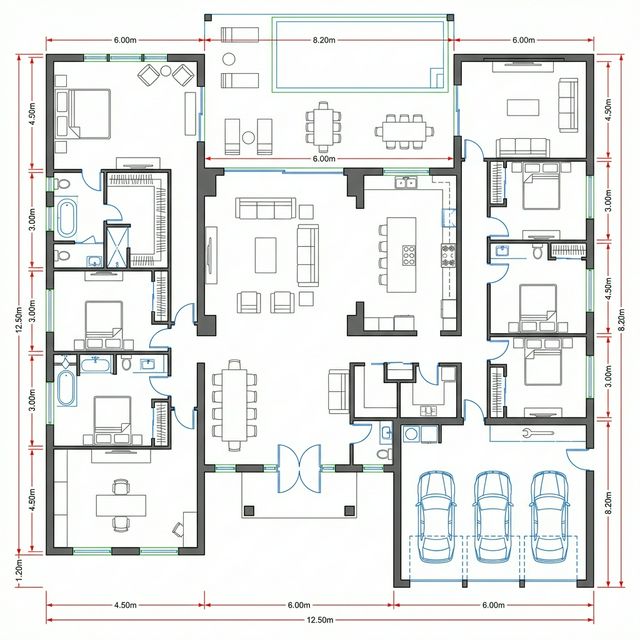
Reality: A courtyard is a climate device as much as a spatial one, providing light and ventilation to internal rooms while controlling exposure. It is one of the oldest responses to this climate.
How to check it yourself: Ask whether a courtyard could serve rooms that would otherwise need external windows facing difficult orientations.
Myth 5: Skylights are a good way to light internal spaces
Reality: Horizontal glazing receives the most intense solar exposure and is the hardest orientation to shade. Used without care, a skylight is a heat source with a view of the sky.
How to check it yourself: Ask how any proposed skylight is shaded and how it performs in summer rather than how it looks in a photograph.
Myth 6: Curtains and blinds can correct a daylight problem later
Reality: Internal shading stops light after it has entered and the heat with it. External shading prevents the gain in the first place, and it is a design decision, not a furnishing one.
How to check it yourself: Ask whether shading is external or internal, since the difference in performance is substantial.
What this changes in your decision
- Request a sun path study specific to your plot.
- Prioritise external shading over glass specification.
- Size openings for the light each room needs rather than for appearance.
- Consider courtyards for internal rooms rather than forcing external windows.
- Treat skylights with caution and always with a shading strategy.
If you are starting a design, Domira can help you write the brief, review the drawings and keep the design aligned with the budget before it reaches a contractor.
Frequently Asked Questions
What is the most effective shading for this climate?
External shading positioned for the orientation it serves: deeper horizontal elements for high sun, and vertical or screening elements for low western sun. The right device depends on orientation, which is why a single approach applied to every facade performs poorly.
Does good daylight design reduce cooling cost?
Yes, in two ways: by reducing solar heat gain and by reducing the need for artificial lighting, which itself produces heat. Both effects continue for the life of the building, which is what makes the design decisions worth the attention.
Can daylight be improved in an existing house?
To an extent. Adding external shading, replacing glass specification and introducing light from a less exposed orientation are all possible. What cannot easily be changed is the fundamental orientation and depth of the plan, which is why these decisions matter at design stage.
Have a Property Question?
Domira can help you navigate property, financing and investment decisions in Saudi Arabia. Speak with our team for an initial consultation.