
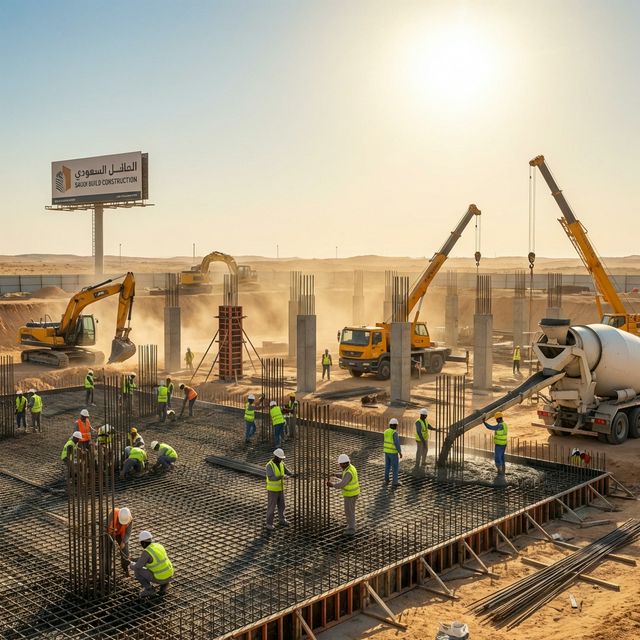
Cement content, admixtures, ice, timing and curing all change what a cubic metre costs in a Saudi summer. Here is what each line buys you and where it can be reduced.
In a Saudi summer, the cost of concrete is not only the cost of the mix. It is the mix plus everything done to deliver it below a controlled temperature and keep it from losing water too fast: chilled water or ice, retarding admixtures, night pouring, extra labour, curing materials and sometimes an extra pump. This breakdown separates those lines so you can see which ones protect the structure and which are avoidable.
What this number does and does not include
This covers the cost drivers in supplying and placing structural concrete in hot conditions, from the mix leaving the plant to the end of curing. It does not cover formwork, reinforcement or the structural design that decides how much concrete you need. It also assumes ready mixed supply rather than site batching, because for anything beyond small volumes a plant with temperature control is the safer source.
Cement type and content
Cement drives both strength and the heat generated as the concrete sets. A richer mix reaches strength faster and costs more, but it also releases more heat, which in a thick section can create a damaging temperature difference between the core and the surface. Blended cements with supplementary materials reduce that heat and often improve durability in aggressive ground.
- Pushes it up: High early strength requirements, aggressive ground needing sulphate resistance, and very thick sections.
- Brings it down: A realistic strength class from the structural engineer and a longer strength assessment age where the design allows it.
- How to control it: Ask the engineer whether the specified class and age are genuinely required, and review the mix with the supplier before the first pour.
Temperature control of the fresh concrete
Specifications limit the temperature of concrete at the point of placing because hot concrete loses workability fast, sets early and can suffer long term strength loss. Reaching the limit in summer means chilled mixing water, ice replacing part of the water, shaded and cooled aggregate stockpiles, or scheduling pours at night.
- Pushes it up: Daytime pouring in peak summer, long haul distances and large continuous pours.
- Brings it down: Night or early morning pouring, a batching plant close to site, and smaller pour sizes where the design allows construction joints.
- How to control it: Record the concrete temperature at discharge on every load and reject loads outside the specified limit.
Admixtures
Retarders extend the time the concrete remains workable, water reducers achieve workability without adding water that weakens the mix, and in some cases a combination allows a long pour in heat without cold joints. They are a small part of the cubic metre price and prevent problems that are very expensive to repair.
- Pushes it up: Long haul times, hot afternoons, congested reinforcement needing high workability, and pumped placement.
- Brings it down: Shorter transport, cooler placing windows and simpler sections that do not demand extreme workability.
- How to control it: Approve the admixture dosage as part of the mix design and prohibit site addition of water to restore slump.
Transport and delivery timing
Every minute between batching and discharge is time the mix is warming and stiffening. In heat, the allowable time from batching to placing shortens, which means tighter scheduling, more trucks waiting in the right order and a real cost if the site is not ready when they arrive.
- Pushes it up: Distant plants, traffic restrictions, and a site that cannot take trucks in a continuous sequence.
- Brings it down: A nearby plant, a delivery schedule agreed with the supplier, and a site layout that lets a truck discharge and leave.
- How to control it: Log batching time and discharge time for every load and treat exceedances as a quality event, not an inconvenience.
Placing method and plant
A pump places concrete faster than a chute or skip, which matters in heat because the previous layer must still be plastic when the next arrives. Pumping needs a mix designed to be pumped, and standby arrangements matter: a pump breakdown in mid pour is how cold joints appear in walls and slabs.
- Pushes it up: Restricted access, high lifts, long horizontal distances and large single pours.
- Brings it down: Good vehicle access that allows direct discharge, and pours sized to the plant available.
- How to control it: Agree a standby plan before the pour, including a second pump or an agreed construction joint position if the first fails.
Curing materials and labour
Curing keeps water in the concrete while it gains strength. In dry heat and wind, an unprotected surface loses water within minutes and cracks before it has any strength. Curing compounds, covers, hessian kept wet and a worker whose job is to maintain them are all cost lines, and they are among the cheapest insurance on the site.
- Pushes it up: Large exposed slab areas, windy sites, and elements where curing must continue for an extended period.
- Brings it down: Pouring outside peak heat, which reduces evaporation, and sequencing so slabs can be covered quickly.
- How to control it: Name curing as a paid activity with a responsible person, and inspect it daily rather than assuming it happened.
Testing and acceptance
Cubes, slump tests, temperature readings and the laboratory that processes them cost money per pour and give you the right to reject non conforming concrete. Testing also has to be done correctly, because cubes left in the sun or cured badly produce low results that trigger arguments over concrete which was actually fine.
- Pushes it up: Many small pours, each requiring its own sample set, and additional testing after a failure.
- Brings it down: Consolidating pours where the design allows, and a stable approved mix that stops generating queries.
- How to control it: Use an accredited laboratory and insist that sample storage and curing conditions are recorded.
Protection of thick sections
Rafts and large transfer elements generate internal heat that cannot escape. Controlling the peak temperature and the difference between core and surface may need a lower heat mix, insulation on the surface to slow cooling, or embedded temperature monitoring. Skipping it produces cracks that run through the section.
- Pushes it up: Thick rafts, pile caps, large columns and any element the engineer identifies as mass concrete.
- Brings it down: Splitting the pour where the structural design permits, and using a lower heat cement blend.
- How to control it: Ask whether any element qualifies as mass concrete and, if so, require a written thermal control plan.
Costs that never appear on the first page
- Waiting time charged by the ready mix supplier when the site is not ready to receive trucks.
- Rejected loads that still have to be paid for or replaced at short notice.
- Rework of surfaces that crazed or cracked plastically because curing started late.
- Night working premiums for labour, supervision and testing laboratory attendance.
- Repair of cold joints discovered when formwork is struck, including investigation and possible grouting.
- Delay to every following trade when a pour is aborted and rescheduled.
Keeping the budget honest
Budget hot weather measures as a fixed part of the concrete cost for summer pours rather than as a contingency to be argued about load by load. They are predictable: if the pour is in July, the ice, the retarder, the night shift and the curing crew are certain, and pretending otherwise just moves the money into a variation later. Where the programme has flexibility, moving a major pour out of peak summer saves more than every admixture decision combined.
- At mix design approval, before any concrete is ordered.
- At the pre pour meeting for each significant element, where temperature, timing and standby plant are confirmed.
- On the first summer pour, comparing actual delivery temperatures and times against the plan.
- After any cube result below specification, before the next pour of the same mix.
- At the end of the structural phase, reviewing rejected loads and rework against what was budgeted.
Domira builds and supervises projects across Saudi Arabia, and this is the level of detail its site teams work at. Send the drawings or the site, and Domira will tell you what the specification has to say before anyone prices it.
Frequently Asked Questions
What is the maximum temperature for placing concrete in hot weather?
Limits for the temperature of fresh concrete at placing are set in the project specification, following the Saudi Building Code and the relevant concrete standards, and they can differ by element and mix. Take the figure from your specification and confirm the current requirement with your engineering office, since standards are periodically updated. Then measure it at discharge on every load rather than assuming compliance.
Why is ice used in concrete in Saudi Arabia?
Replacing part of the mixing water with ice lowers the temperature of the fresh concrete as the ice melts and absorbs heat. Cooler concrete keeps its workability longer, is less likely to set prematurely in the truck, and avoids the long term strength loss associated with high placing temperatures. It is one of several measures, used alongside chilled water, shaded aggregates and night pouring.
Can water be added to concrete on site if it is too stiff?
Not without authorisation, because added water increases the water to cement ratio and reduces strength and durability permanently. If workability has fallen, the correct response is a specified admixture dose added and mixed under the supplier procedure, or rejection of the load. Site added water is one of the most common and most damaging shortcuts on a hot day.
Does pouring concrete at night cost more?
Usually yes, through labour premiums, lighting, supervision and laboratory attendance outside normal hours. It often costs less overall in summer, because the concrete arrives cooler, stays workable longer, needs less cooling at the plant and suffers less plastic shrinkage cracking. Compare the two as total cost per pour, including the risk of rejected loads and rework.
Have a Property Question?
Domira can help you navigate property, financing and investment decisions in Saudi Arabia. Speak with our team for an initial consultation.
