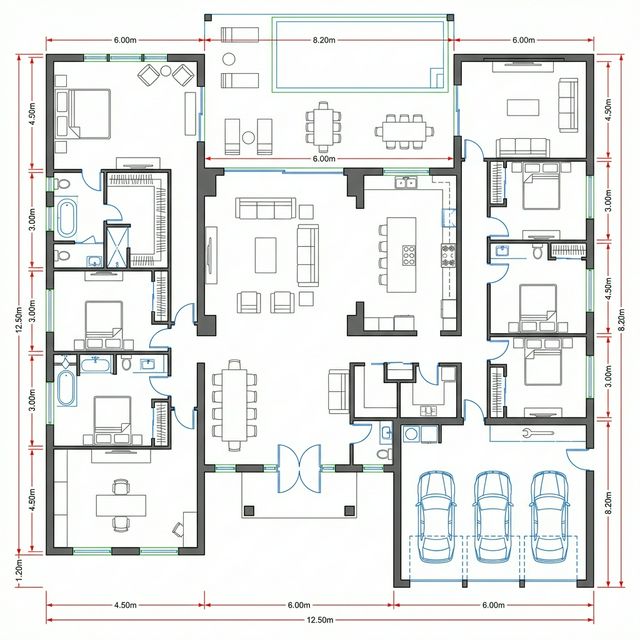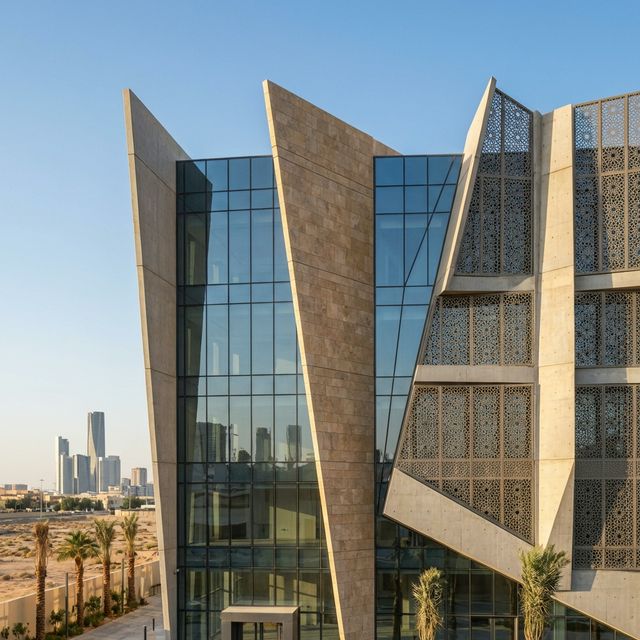
Design proceeds through stages for a reason. What each produces, and the cost of skipping ahead.
Owners frequently want detailed drawings early, on the reasonable assumption that detail equals progress. Detail applied to unresolved decisions is wasted work, which is why the stages exist and why compressing them tends to extend the programme rather than shorten it.
Before stage one
Before design begins, the brief should be approved, the plot constraints confirmed and the budget stated. Design without these proceeds on assumptions that surface later as changes.
- Approved brief covering function, privacy and priorities.
- Plot constraints confirmed by the engineering office.
- Budget stated with a priority order.
- Soil investigation commissioned where the structure will depend on it.
Stage 1: Concept design
Establish the organising idea: how spaces relate, how circulation works, how the building sits on the plot and responds to orientation.
- Deliverable: Concept plans, sections and an area schedule with an indicative cost check.
- Owner: Architect with the owner.
- Approval gate: Owner approves the concept and the area schedule before development proceeds.
Stage 2: Developed design
Resolve the design in detail: dimensions, materials, structural coordination and the principles of the services layout.
- Deliverable: Developed drawings with outline specification and an updated cost check.
- Owner: Design team.
- Approval gate: Coordination between disciplines confirmed before detailing begins.
Stage 3: Permit documentation
Prepare the drawings and documentation required for the building permit, demonstrating compliance.
- Deliverable: A submission package meeting the authority's requirements.
- Owner: Licensed engineering office.
- Approval gate: Submitted complete, since incomplete submissions consume a review cycle.
Stage 4: Construction documentation
Produce the drawings and specifications a contractor needs to build and to price accurately.
- Deliverable: Construction drawings, specifications and a bill of quantities.
- Owner: Design team.
- Approval gate: Documentation complete enough that a contractor can price without assumptions.
Stage 5: Tender support
Answer contractor queries during tender and clarify the documentation where needed.
- Deliverable: Clarifications issued to all bidders equally.
- Owner: Architect.
- Approval gate: All bidders pricing the same information.
Stage 6: Construction stage services
Review shop drawings, respond to site queries and inspect at agreed stages if appointed for supervision.
- Deliverable: Reviewed submissions and resolved queries.
- Owner: Architect, under a separate appointment where applicable.
- Approval gate: Scope of construction stage involvement agreed before construction begins.
Handovers between stages
The most costly compression is skipping from concept to permit drawings without developed design. It produces a permit for a building whose details have not been resolved, and those details are then resolved on site, at construction prices.
How you know it is finished
Design is complete when the documentation describes a buildable project that a contractor can price without assumptions, and when the cost checks at each stage have kept the design aligned with the budget.
If you are starting a design, Domira can help you write the brief, review the drawings and keep the design aligned with the budget before it reaches a contractor.
Frequently Asked Questions
Can I get a permit without full construction drawings?
Permit requirements and construction documentation serve different purposes, and a permit package is usually less detailed than what a contractor needs to build. Proceeding to construction on permit drawings alone means the remaining decisions are made on site, which is where variations originate.
How long should design take for a villa?
Longer than owners usually expect, particularly when approvals and coordination between disciplines are included. Compressing design rarely saves overall time, because unresolved decisions reappear during construction where they cost more and take longer.
What is the most important stage?
Concept, because it determines the organising decisions that everything else develops from and it is the cheapest stage at which to change direction. Owners who invest attention at concept and approve carefully spend far less time in revision later.
Have a Property Question?
Domira can help you navigate property, financing and investment decisions in Saudi Arabia. Speak with our team for an initial consultation.