
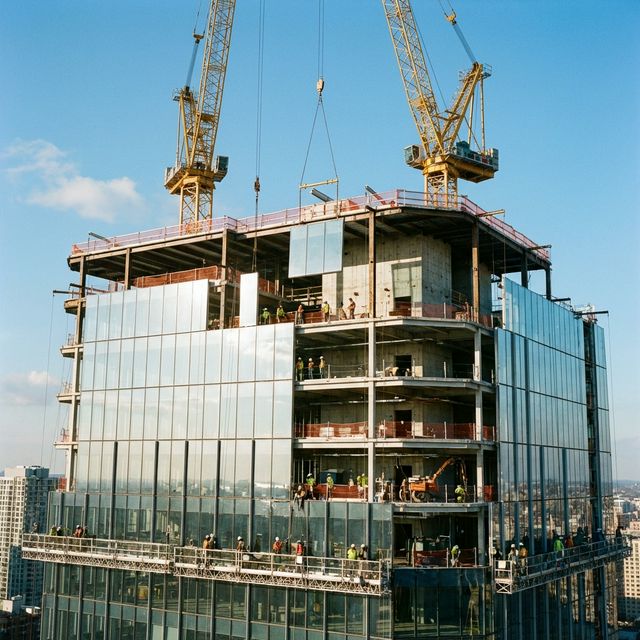
A breakdown of what a supervision fee buys, how it scales with project size, and the failures it is designed to catch.
Supervision is priced as a percentage or a monthly fee and is rarely broken down, which makes it feel like an administrative charge. This breakdown separates what the fee actually pays for, so it can be compared against the failures it prevents.
What this number does and does not include
This covers construction supervision on a private project: site inspection, payment certification, quality control and progress reporting. Design fees and the contractor's own site management are separate and sit outside this.
Site attendance
The engineer's time on site, which is the largest component and the one that varies most with project stage.
- Pushes it up: Frequent attendance, long travel distances and stages requiring presence on the day such as concrete pours.
- Brings it down: Risk-based attendance concentrated at hold points rather than a fixed schedule regardless of activity.
- How to control it: Agree attendance by trigger rather than by calendar, so critical stages are covered without paying for routine visits during quiet periods.
Quality inspection and hold points
Inspection of reinforcement, waterproofing, services before concealment and finishing samples.
- Pushes it up: Complex structures, multiple wet areas and a specification with many named products requiring approval.
- Brings it down: Clear specifications and drawings, which reduce the number of ambiguities to resolve on site.
- How to control it: List the hold points explicitly in the supervision scope so both attendance and responsibility are defined.
Measurement and payment certification
Measuring completed work and certifying the amounts due, which is what keeps payment aligned with progress.
- Pushes it up: Complex bills of quantities, frequent variations and contractors submitting poorly supported claims.
- Brings it down: A clear payment schedule tied to defined stages rather than to percentage estimates.
- How to control it: Define the certification period in the contract so certification is prompt and disputes about timing do not arise.
Variation assessment
Pricing and assessing changes before they are executed, including their time impact.
- Pushes it up: Owners who change their minds frequently, and incomplete designs that generate variations by necessity.
- Brings it down: A complete design before tender, which is the single largest reducer of variation volume.
- How to control it: Batch changes into scheduled reviews rather than issuing them individually, which reduces both assessment effort and programme disruption.
Reporting and documentation
Progress reports, photographic records, test result tracking and the handover file.
- Pushes it up: High reporting frequency and extensive documentation requirements.
- Brings it down: A defined reporting format agreed at the start rather than ad hoc requests.
- How to control it: Specify the report contents and frequency in the scope, since reporting that is not defined tends to be either excessive or absent.
Costs that never appear on the first page
- Additional attendance during extended programmes, which is usually charged separately.
- Specialist input such as structural review or testing coordination.
- Travel and subsistence on remote sites.
- Attendance at disputes or claims, which is outside routine supervision.
Keeping the budget honest
Compare the supervision fee against the cost of a single significant failure it is designed to prevent: a rejected structural element, a waterproofing failure discovered after handover, or a payment certified ahead of progress. Measured that way, the fee is usually a fraction of one avoided event.
- Before signing, to agree attendance triggers and reporting.
- At the end of the structural phase, when the most critical inspections have occurred.
- When variations accumulate, since assessment effort rises with them.
- Before handover, to confirm the documentation scope is being delivered.
If you are preparing to build, Domira can review your drawings, scope and contractor offers before you commit, and supervise delivery against the programme and specification you agreed.
Frequently Asked Questions
Is supervision usually charged as a percentage or a fixed fee?
Both are used. A percentage scales with project value but not necessarily with effort, while a fixed fee with a defined scope and attendance frequency is easier to compare between offers and easier to hold to account. What matters most is that the scope defines attendance, authority and reporting.
Can the design office supervise its own design?
It is common and has the advantage of familiarity with the intent. The limitation is that design errors are less likely to be identified by the party that made them, which is why some owners separate the roles on larger or more complex projects.
What should I do if supervision reports say everything is fine every month?
Ask for measurements rather than reassurance: certified percentage complete, test results received, non-compliances raised and closed. A report with no findings over several months on an active site usually indicates reporting by attendance rather than by inspection.
Have a Property Question?
Domira can help you navigate property, financing and investment decisions in Saudi Arabia. Speak with our team for an initial consultation.
