
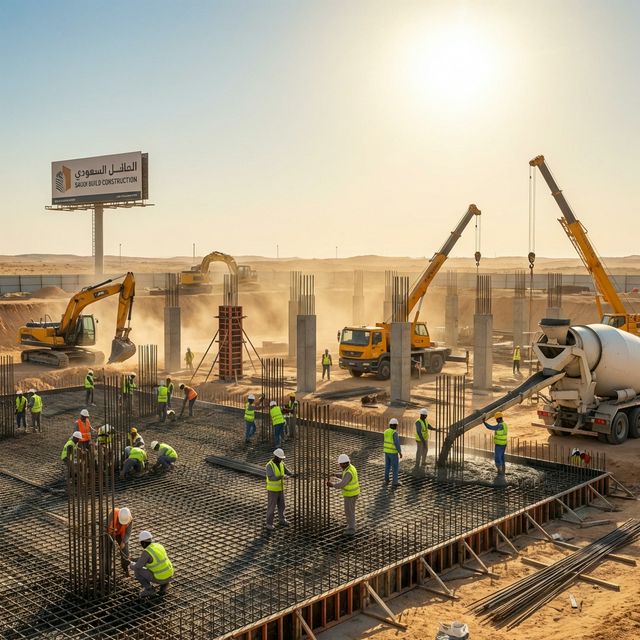
How money is released determines what happens when a project slows down. These are the structures that leave owners paying ahead of progress.
A payment schedule looks administrative and is usually negotiated in minutes. It is, in practice, the mechanism that decides who holds leverage for the rest of the project. Once you are paid ahead of the work, every later conversation is conducted from a weaker position.
Why these keep happening
The pattern behind these mistakes is that payment becomes linked to time, trust or convenience rather than to verified physical progress. Each one feels reasonable in isolation and only reveals itself when performance slips.
1. Paying by calendar rather than by progress
Monthly instalments are simple to administer and easy for both sides to plan around.
- Avoid it by: Attach every instalment to a physical stage that a supervising engineer certifies as complete.
- Proof it is closed: A payment schedule where each row names a stage and the certificate that releases it.
What it costs you: Payment continues at the same rate whether the site is busy or idle, so slippage costs the contractor nothing until the end.
2. An advance payment that is never recovered
Mobilisation genuinely requires funds, and recovery details feel like a technicality at signing.
- Avoid it by: Recover the advance proportionally from each subsequent payment so exposure falls as work proceeds.
- Proof it is closed: A recovery schedule showing the outstanding advance balance alongside each certificate.
What it costs you: The advance effectively becomes an unsecured loan, and the amount at risk stays high for the whole project.
3. No retention, or retention released too early
Contractors push for release at handover, and owners want the relationship to end cleanly.
- Avoid it by: Hold a defined percentage until the defects liability period ends and inspect formally before releasing.
- Proof it is closed: A retention clause naming the percentage, the release date and the inspection that precedes it.
What it costs you: The defects that matter most appear after handover. Without retention, you are asking for goodwill rather than exercising a right.
4. Certifying progress from the contractor's own report
It is faster, and disputing a percentage feels confrontational when the site looks busy.
- Avoid it by: Require independent certification against measured quantities, not against a narrative description.
- Proof it is closed: A signed certificate with measured quantities attached for each payment.
What it costs you: Claimed progress consistently exceeds real progress, and the gap becomes visible only when the money is nearly exhausted.
5. Paying for materials stored off site
Suppliers demand payment on order, and contractors pass that requirement through.
- Avoid it by: Pay for materials on delivery to site, or require documented ownership transfer and insurance if payment must precede delivery.
- Proof it is closed: Delivery notes matched to the payment, or title and insurance documents where the material is stored elsewhere.
What it costs you: You have paid for goods you do not control and cannot identify if the contractor's situation deteriorates.
6. Leaving variations to be settled at the end
Pricing each change as it arises slows the work, and both sides prefer to keep moving.
- Avoid it by: Price and approve every variation in writing before it is executed, and include it in the next certificate.
- Proof it is closed: A variation register with each entry approved before execution and reflected in a payment certificate.
What it costs you: A large unpriced balance accumulates, and it is negotiated at the worst possible moment, when the project is nearly finished.
A short check before you sign
- Does each payment name a physical stage rather than a date?
- Is the advance recovered progressively, with a visible outstanding balance?
- Is retention defined with a release date and a pre-release inspection?
- Who signs the certificate, and are they independent of the contractor?
- Are variations priced before execution rather than accumulated?
If it has already happened
If you are already paid ahead of progress, stop and measure. Have quantities measured independently, establish the real percentage complete, and agree a revised schedule in which the remaining payments trail progress rather than lead it. Contractors usually accept this once it is presented as a corrected measurement rather than an accusation.
If you are preparing to build, Domira can review your drawings, scope and contractor offers before you commit, and supervise delivery against the programme and specification you agreed.
Frequently Asked Questions
What is a reasonable retention percentage?
Five to ten per cent of contract value is common, often released in two parts: half at handover and half at the end of the defects liability period. What matters more than the exact figure is that the release conditions and dates are written down and that an inspection precedes each release.
The contractor says certification delays will slow the work. Is that fair?
Partly. Certification should be prompt, and the contract should give a defined period for it, such as a set number of days from submission. The answer to slow certification is a deadline for the certifier, not the removal of certification.
Should payments be made to the company or to individuals?
Always to the contracting entity named in the contract, against an invoice referencing the certificate. Payments to individuals or to unrelated accounts weaken your position considerably if a dispute later requires you to prove what was paid and for what.
Have a Property Question?
Domira can help you navigate property, financing and investment decisions in Saudi Arabia. Speak with our team for an initial consultation.
