
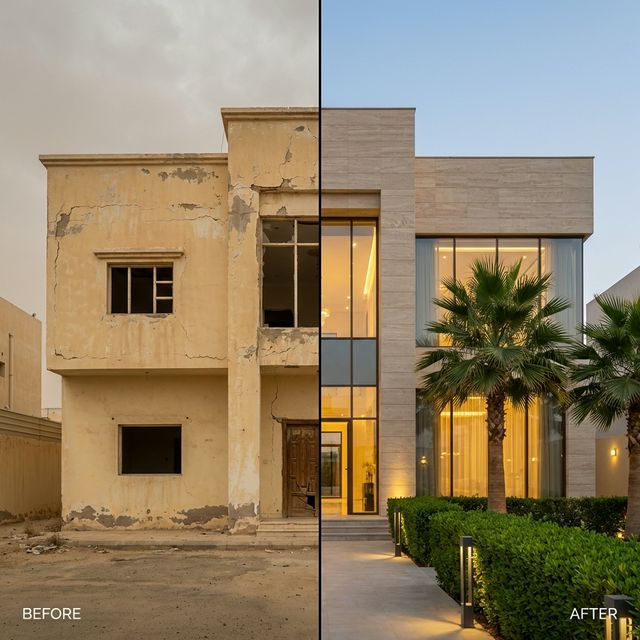
A condition survey is only useful if it names remaining lives, priorities and costs. The sequence for commissioning one that supports decisions rather than describing the obvious.
A condition survey records what exists, what condition it is in, how long it will last and what it will cost to put right. Many reports stop at the second of those, producing an expensive description of a building the owner already walks through weekly. The value sits in the remaining lives and the costed priorities, so those have to be in the brief before anyone is appointed.
Before stage one
Commission a survey when you are about to make a decision that depends on it: buying, budgeting a sinking provision, planning a refurbishment, preparing to let, or taking over an asset from a developer or a previous manager. A survey without a decision behind it tends to be scoped vaguely and read once. Knowing the decision also tells the surveyor what depth is required where.
- State the decision the survey must support, in one sentence, at the top of the brief.
- Gather existing drawings, manuals, service records and any previous survey for the surveyor.
- Confirm access to roofs, plant rooms, risers, voids and any tenanted areas that must be seen.
- Decide whether intrusive investigation is permitted and who will make good afterwards.
- Set the output format required, including remaining lives and costed priorities.
Stage 1: Write the brief before approaching surveyors
The brief states the decision, the elements to be covered, the depth required for each, whether testing is included, the format of the output and the date it is needed. Without it, each proposal covers something different and the fee comparison is meaningless. Specify that recommendations must carry a priority, an indicative cost and a remaining life, because this is what distinguishes a useful report.
- Deliverable: A written brief issued identically to every surveyor approached.
- Owner: The owner or the asset manager.
- Approval gate: Every proposal received answers the same brief.
Stage 2: Appoint on competence rather than on fee
Ask for an example report, redacted, from a comparable building, and read it as the client would. Check whether the recommendations are specific and costed or whether they consist of advice to obtain further advice. Confirm who will attend site, since proposals are often written by one person and executed by another. Verify professional indemnity cover appropriate to the decisions you will take on the report.
- Deliverable: An appointment letter naming the individual attending and the deliverable format.
- Owner: The owner, having read a sample report from each candidate.
- Approval gate: A sample report seen and judged against your own brief.
Stage 3: Enable genuine access
A survey conducted from the ground with binoculars produces a report full of qualifications. Arrange roof access, open plant rooms, unlock risers, provide access equipment where elevations must be inspected closely, and notify tenants in advance. Every area not inspected becomes an exclusion in the report, and exclusions are where the surprises live.
- Deliverable: An access schedule agreed in advance, with equipment booked where needed.
- Owner: Facilities manager or the owner representative.
- Approval gate: The surveyor confirms in writing that the planned access is sufficient.
Stage 4: Carry out the survey with testing where it earns its place
Visual inspection answers many questions and not the expensive ones. Targeted testing, such as moisture measurement, thermal imaging, electrical testing, cover meter surveys on concrete or drainage inspection by camera, converts opinion into evidence. Testing should be targeted at the elements where the decision is sensitive rather than applied uniformly.
- Deliverable: Survey records including test results with locations and methods stated.
- Owner: Surveyor, with specialists subcontracted as needed.
- Approval gate: Each significant finding is supported by evidence rather than by inference.
Stage 5: Receive a draft and challenge it
Read the draft against your original decision. Ask what each recommendation would cost, when it has to happen and what occurs if it is deferred. Push back on every phrase that recommends further investigation without saying what the investigation would resolve. A good surveyor welcomes this, because it produces a report that will actually be used.
- Deliverable: A commented draft with every query answered in the final version.
- Owner: The owner, reading the report in full rather than the summary only.
- Approval gate: No recommendation remains that you cannot act on or consciously defer.
Stage 6: Convert the report into a plan
Transfer the findings into the asset register and into the maintenance and capital plan. Each item should land in a year, with a cost, an owner and a trigger for review. A report that stays as a document changes nothing. The conversion into a plan is where the fee becomes an investment rather than a cost.
- Deliverable: An updated asset register and a dated action plan with owners and budgets.
- Owner: The asset manager, with the finance team pricing the plan.
- Approval gate: Every priority item appears in a budget year with a named owner.
Stage 7: Set the re survey interval
Conditions change, items are repaired and estimates prove wrong. Decide now how often the survey will be refreshed, which for most buildings is every few years and sooner where an element is deteriorating. Keep the original report, because the comparison between surveys is often more informative than either report alone.
- Deliverable: A diarised re survey date and the previous report filed for comparison.
- Owner: The owner or asset manager.
- Approval gate: The next survey date exists in the budget and in the calendar.
Handovers between stages
The weak joint is between the report and the budget. Surveys are frequently commissioned by one party and received by another who was not involved in the brief, so the recommendations are read as a wish list rather than as a plan. Involve whoever controls the budget in writing the brief. The second joint is between surveys, where an item flagged as needing attention in two years is forgotten in the thirteenth month because nobody diarised it.
How you know it is finished
The survey has done its job when every finding sits in the asset register with a year, a cost and an owner, when the decision that prompted it has been made with the report in hand, and when the re survey date is booked. Where findings touch on statutory obligations, such as fire safety or electrical verification, confirm the current requirements with the relevant authority rather than relying on the report wording, since these are periodically revised, and take advice from a licensed adviser where a finding affects a lease, a sale contract or an insurance position.
Domira works on buildings that already exist: surveying what is installed, specifying the systems that have to be replaced, and running maintenance and refurbishment work around the people using the property. Tell Domira which asset you are responsible for and we will say what we would inspect first.
Frequently Asked Questions
What should a building condition survey report contain?
A description of each element, its condition, its estimated remaining life, the recommended action with a priority, an indicative cost and the consequence of deferral, plus a clear list of what was not inspected and why. Photographs with locations and the results of any testing should support the findings. Without lives and costs, the report describes rather than decides.
How much does a condition survey cost relative to the building?
Fees scale with the size of the asset, the depth of inspection and the amount of testing included, so the useful comparison is between proposals answering an identical brief rather than against a rule of thumb. Judge value by whether the output will change a decision. A cheaper report that cannot be acted on is the more expensive option.
How often should a condition survey be repeated?
For most buildings every few years, with a shorter interval where an element is deteriorating or where a major decision is approaching. Repeating the survey with the previous one in hand is particularly valuable, because the rate of change between the two often tells you more about remaining life than either assessment on its own.
Have a Property Question?
Domira can help you navigate property, financing and investment decisions in Saudi Arabia. Speak with our team for an initial consultation.
