
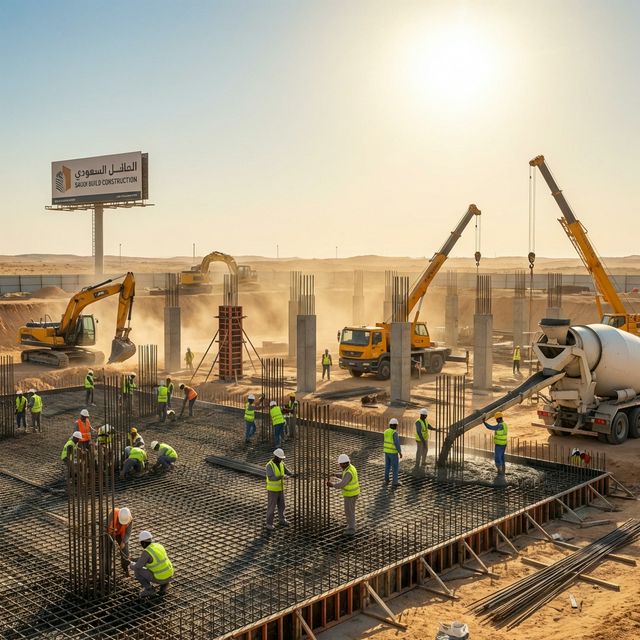
An events hall is a peak-load building used a few nights a week. Six assumptions about halls in Saudi Arabia, tested against parking, cooling, catering and licensing reality.
A wedding hall is one of the most intensely peaked buildings anybody builds. It is empty most of the week and then holds several hundred people, with catering, parking, cooling and drainage all at maximum within the same two hours. Owners consistently size it for the average and then discover the peak. These are the assumptions that cause that, with a test for each.
How to test a claim like this
Test any claim about an events hall against the single busiest hour it will ever have: arrival. Count the guests, the vehicles arriving at once, the meals served, the toilets in use, the cooling load from bodies and lighting, and the drainage all happening together. Any specification that works on a weekly average and fails in that hour is the wrong specification, because that hour is the product.
Myth 1: A hall is a simple building, essentially a large room.
Reality: It is a long-span, high-occupancy assembly building with a commercial kitchen or catering area, extensive toilet provision, a heavy cooling load and an escape strategy for hundreds of people. Assembly use brings requirements for exits, signage, emergency lighting and fire systems that a large warehouse-shaped building does not have.
How to check it yourself: Ask your designer to confirm the requirements for assembly occupancy at your guest capacity with the relevant authority before the plan is fixed.
Myth 2: Parking can be handled with the plot frontage and street parking.
Reality: Guests arrive within a short window, mostly by car, often several people per vehicle but still in large numbers. Without enough on-site parking and a workable drop-off, the street becomes congested, neighbours complain, and guests form their opinion of the venue while looking for a space. Parking is the most common reason a hall gets poor word of mouth.
How to check it yourself: Calculate vehicles for your maximum capacity and design the parking and drop-off for arrival within a thirty-minute window.
Myth 3: Cooling can be sized from the floor area.
Reality: The load is driven by occupants, lighting and the kitchen, not by the area. Several hundred people plus stage lighting produce a very large internal gain that arrives suddenly and does not exist at any other time of the week. Systems sized on area alone leave the hall warm at exactly the moment it is full.
How to check it yourself: Require a cooling load calculation based on maximum occupancy plus lighting and kitchen gains, with the pull-down time before guests arrive.
Myth 4: Catering can be brought in, so no kitchen is needed.
Reality: External caterers still need a finishing kitchen, cold storage, hot holding, a wash-up area, a delivery route that does not cross guests, and waste storage for a large volume produced in one evening. A hall without these forces caterers to work in corridors and car parks, which shows in the service and in the hygiene.
How to check it yourself: Ask two local caterers what facilities they require for your guest capacity and design to the more demanding answer.
Myth 5: Revenue is straightforward because each event pays well.
Reality: Utilisation is the variable that decides everything. A hall used for a small number of events a month carries its full fixed cost of cooling standby, staffing, maintenance, insurance and finance the rest of the time. Seasonality is strong, and a single competing venue opening nearby can take a meaningful share of a small local market.
How to check it yourself: Model the hall at a realistic number of events per month in the low season and confirm the fixed costs are covered.
Myth 6: Licensing is a formality once the building is finished.
Reality: Operating a venue involves municipal licensing, civil defence approval for assembly occupancy and food handling requirements where catering happens on site. Each has requirements that affect the building, and discovering them after construction means altering a finished hall while bookings are already taken.
How to check it yourself: Confirm the licensing and approval requirements with the municipality and the relevant authorities during design, and take advice from a licensed adviser.
What this changes in your decision
- Design every system for the arrival hour and the maximum guest count, not the weekly average.
- Calculate parking and drop-off from vehicle numbers arriving within a thirty-minute window.
- Obtain a cooling load calculation based on occupancy, lighting and kitchen gains, including pull-down time.
- Specify catering facilities from what local caterers actually require at your capacity.
- Model the business at low-season utilisation and check the fixed costs are still covered.
Domira designs, builds and manages projects across Saudi Arabia for owners who are based abroad: land appraisal, feasibility, design, construction, handover and asset management under one accountable contract. Send us the plot or the brief and Domira will put the numbers in front of you before you commit.
Frequently Asked Questions
What is the most common design mistake in a wedding hall?
Sizing services and parking from the floor area or from average use rather than from the arrival hour at maximum capacity. Cooling, toilets, drainage, parking and drop-off all peak together within about thirty minutes, and that hour is what guests judge. A hall that works on average and fails at peak acquires a reputation quickly in a local market.
Does an events hall need its own kitchen if caterers are used?
It needs catering support facilities even when food arrives from outside: a finishing kitchen, cold storage, hot holding, wash-up, a delivery route separate from guests and waste storage for one evening worth of volume. Ask local caterers what they require at your capacity and design to the more demanding answer, because they will otherwise improvise in corridors.
How do you judge whether a wedding hall is a viable investment?
By utilisation rather than by the price of one event. Work out the fixed annual cost of the building, staffing, maintenance, insurance and finance, then calculate how many events per month at your achievable price cover it. Test that against low-season demand and against the possibility of a competing venue opening in the same catchment.
Have a Property Question?
Domira can help you navigate property, financing and investment decisions in Saudi Arabia. Speak with our team for an initial consultation.

