
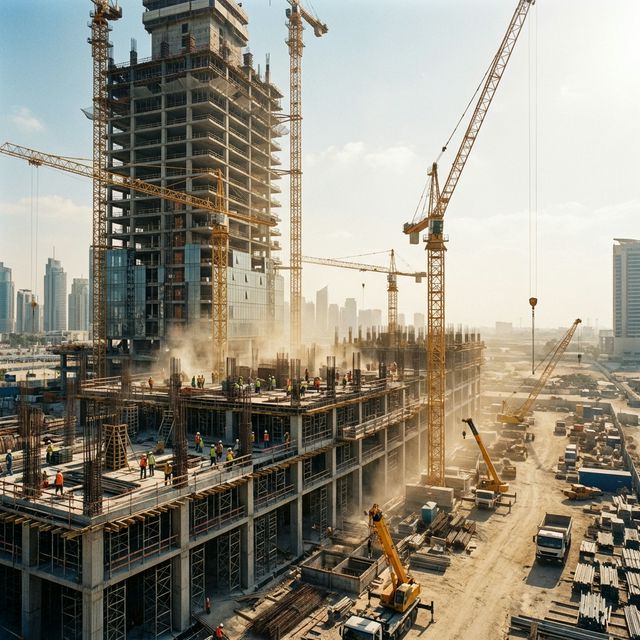
A build can look healthy in photographs and reports while sliding quietly behind. The verification habits that separate real progress from the appearance of it.
Progress is not the same as activity. A site full of people can be producing work that is not on the critical path, work that will be rejected, or work that cannot continue because a material has not been ordered. Verification means testing progress against the programme and against physical evidence, which can be done from another country if you ask for the right things.
Why these keep happening
These mistakes share one feature: they measure effort or appearance rather than position. Effort is easy to photograph and pleasant to report. Position requires comparing what exists against what the programme said would exist by now, and that comparison is the only thing that tells you whether you are on track.
1. Reading percentage complete as a fact
A single number is easy to report, easy to read, and nobody asks how it was calculated.
- Avoid it by: Ask for progress by activity against the programme, and for the basis on which each percentage was assessed.
- Proof it is closed: A progress table naming activities with actual start and finish dates rather than a single figure.
What it costs you: Percentages drift upwards independently of reality, and the correction arrives in the last quarter when nothing can be done.
2. Judging progress from photographs
Images feel like evidence, particularly for an owner who cannot attend.
- Avoid it by: Require fixed position images for comparison plus targeted photographs of the specific activities the programme says are critical this month.
- Proof it is closed: The same viewpoints every month, with a dated file name for each image.
What it costs you: Photographs show the finished face of work, not whether services behind it were inspected or whether the level above is ready.
3. Ignoring the procurement tracker
Ordering is invisible on site, so it does not feature in the mental picture of progress.
- Avoid it by: Treat the procurement tracker as the leading indicator and read it before the progress photographs.
- Proof it is closed: A tracker showing required on site dates against forecast arrival for every long lead item.
What it costs you: A build proceeds normally for months and then stops, because an imported item nobody tracked is still in production.
4. Accepting work that was closed before inspection
The site is moving, an inspector was not available, and covering up feels like progress.
- Avoid it by: Make hold points absolute, with a written rule that work closed without inspection is opened at the contractor cost.
- Proof it is closed: Signed hold point records for every concealed element, filed before the following valuation.
What it costs you: You have paid for something nobody verified, and if it fails, opening it up costs multiples of the original work.
5. Relying on one channel of information
The contractor is the easiest source and answers quickly, so everything comes through them.
- Avoid it by: Appoint a supervising engineer or owner representative who reports to you independently of the contractor.
- Proof it is closed: Two separate monthly documents, one from the contractor and one from your own side.
What it costs you: You receive one interpretation of every event, and you have no way to test it without travelling.
6. Confusing cash certified with work done
The payment application is the most concrete number arriving each month.
- Avoid it by: Require certified value and independently assessed physical progress in the same table every month.
- Proof it is closed: A monthly chart of cumulative certified value against assessed progress.
What it costs you: You can be fifty per cent paid and forty per cent built, which matters enormously if the contractor stops.
7. Skipping the site diary
Daily records look trivial next to a formal report.
- Avoid it by: Require daily labour and plant records to be submitted with the monthly report, not kept on site.
- Proof it is closed: Twelve months of diaries in the project folder, retrievable in one place.
What it costs you: Without them you cannot later show how many people were on site, which is the evidence that decides most delay arguments.
A short check before you sign
- Can you name the activities that are critical this month, from the report alone?
- Do photographs come from the same fixed positions each month?
- Is every long lead item shown against the date it is needed on site?
- Are there signed inspection records for every element already concealed?
- Do you receive a report from someone who does not work for the contractor?
- Is certified value shown against assessed physical progress in one place?
If it has already happened
If you suspect the reports have drifted from reality, commission a single independent progress assessment: an engineer who walks the site, measures what exists against the programme and the priced schedule, and reports to you directly. Do it before the next payment rather than after, and tell the contractor in advance what the visit covers, because a surprise inspection produces defensiveness rather than information. If the assessment shows you have paid materially ahead of the work, take advice before adjusting any certificate.
Domira designs, builds and manages projects across Saudi Arabia for owners who are based abroad: land appraisal, feasibility, design, construction, handover and asset management under one accountable contract. Send us the plot or the brief and Domira will put the numbers in front of you before you commit.
Frequently Asked Questions
How can I check construction progress if I cannot visit the site?
Combine three sources: the updated programme with actual dates, an independent monthly assessment from your own engineer, and fixed position photographs plus targeted images of the activities the programme says are critical. Add the procurement tracker as an early warning. Any one of these alone can be presented favourably, but together they are difficult to make look better than reality.
What does it mean if a contractor reports the same progress figure twice?
It usually means either that work genuinely stalled or that the earlier figure was overstated and reality has caught up with it. Either way it is a question worth asking in writing, naming the activities involved. A contractor who cannot explain a static figure by reference to specific activities is reporting a feeling rather than measuring anything.
Should an owner hire someone locally just to verify progress?
On any project large enough that a month of delay matters, yes. The cost of a supervising engineer or owner representative is small against the cost of discovering a three month slip too late to recover. Their real value is not the report itself but the fact that someone with technical judgement stands between you and the only other source of information you have.
Have a Property Question?
Domira can help you navigate property, financing and investment decisions in Saudi Arabia. Speak with our team for an initial consultation.

