
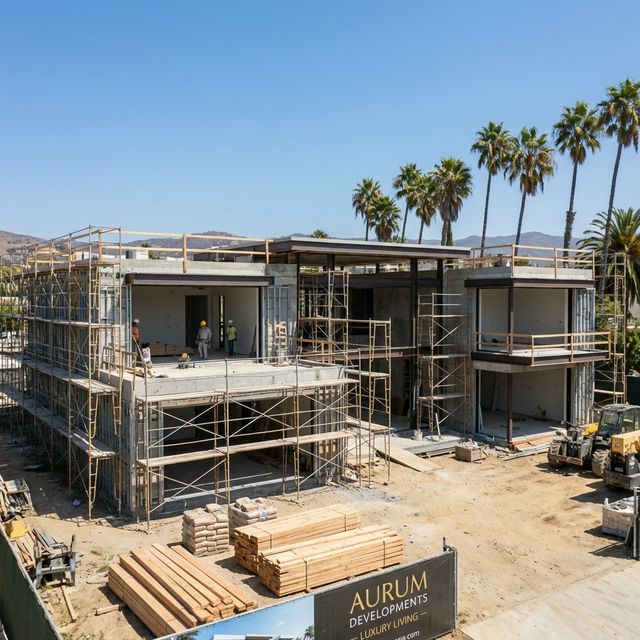
Variations rarely arrive as one big decision. They arrive as twenty small ones, each reasonable, and together they rewrite the budget.
A variation is any change to the work described in the contract, and every variation has three effects: cost, time and risk. Variations become dangerous not because they are expensive individually but because they arrive one at a time, get approved by whoever is available, and are priced after the work is done. The cure is procedural rather than technical.
Why these keep happening
These mistakes come from a single structural weakness: the person who wants the change and the person who will pay for it are not the same person, and there is no moment where the full running total is visible. Fix the visibility and most of the escalation stops on its own.
1. Approving changes without a running total
Each variation is judged against its own small price rather than against what has already been approved.
- Avoid it by: Keep a single variation register showing every item and the cumulative total against the contingency, and circulate it with each valuation.
- Proof it is closed: A register that shows contingency remaining, reviewed at every monthly meeting.
What it costs you: The twentieth reasonable change is approved on a budget that was exhausted at the twelfth, and nobody sees it until the final account.
2. Letting work start before the price is agreed
Stopping site work to price a change feels wasteful, and the contractor offers to proceed and settle later.
- Avoid it by: Require a quotation with a time effect before instructing, except for genuine emergencies, which should be defined narrowly.
- Proof it is closed: Instructions issued only after a priced quotation is accepted in writing.
What it costs you: Pricing after the event removes your only negotiating position, because refusing the price no longer stops the work.
3. Ignoring the time effect of a change
Variations are discussed as money because money is easier to quantify in a meeting.
- Avoid it by: Require every variation quotation to state the effect on the programme in days, including nil where that is the answer.
- Proof it is closed: A time column in the variation register with a stated figure for every item.
What it costs you: An accumulation of small changes extends the programme, and the contractor later claims an extension of time you never assessed.
4. Several people able to instruct changes
An owner abroad relies on a family member, an agent and a consultant, and all three speak to the site.
- Avoid it by: Name one person with authority to instruct, tell the contractor in writing that nobody else can, and keep to it yourself.
- Proof it is closed: A signed authority notice naming the single instructing person, held by the contractor.
What it costs you: The contractor collects instructions from whoever answers, and you inherit changes you never knew about.
5. Treating design development as a variation
The distinction between completing the design and changing it is genuinely subtle, and contractors argue it well.
- Avoid it by: Define the design responsibility and the completeness standard in the contract, and test each claimed variation against the tender documents.
- Proof it is closed: A rejected variations list with the tender document reference for each rejection.
What it costs you: You pay a second time for detail that the original scope already required, on item after item.
6. Allowing omissions to be priced like additions
Nobody checks whether removing work reduces the price by a fair amount.
- Avoid it by: Use the contract rates for both directions and require omissions to be valued on the same basis as additions.
- Proof it is closed: A variation register where omissions show credits consistent with the rates used for additions.
What it costs you: Additions are priced generously and omissions credited meanly, so the contract value only moves in one direction.
7. Leaving variations unsettled until the end
Disagreements are postponed to keep the site moving, and the list grows quietly.
- Avoid it by: Close each variation within a set period of the instruction, and escalate anything unresolved at the monthly meeting.
- Proof it is closed: No variation older than two months sitting in the submitted but unagreed column.
What it costs you: The final account becomes a single large negotiation in which the contractor holds your handover documents and you hold their retention.
A short check before you sign
- Is there one register showing every variation and the contingency remaining?
- Does every variation record a time effect, even where it is nil?
- Is there exactly one person who can instruct a change?
- Are omissions credited using the same rates as additions?
- Is anything older than two months still unpriced?
- Can you name the tender document that decides each disputed variation?
If it has already happened
If variations have already escalated, stop instructing anything for two weeks and rebuild the register from the correspondence. Separate agreed, submitted and disputed items, then settle the agreed ones promptly to rebuild trust and deal with the disputed list as one negotiation with documents. Where the sums are substantial or the wording of past instructions is ambiguous, have a licensed adviser review your position before you make an offer.
Domira designs, builds and manages projects across Saudi Arabia for owners who are based abroad: land appraisal, feasibility, design, construction, handover and asset management under one accountable contract. Send us the plot or the brief and Domira will put the numbers in front of you before you commit.
Frequently Asked Questions
How much contingency should an owner keep for variations?
Enough to absorb the changes a project of your type genuinely produces, which depends on how complete the design was at tender and how much of the site was unknown. A fully detailed design on a clear plot needs less than a partial design on a plot with existing structures. What matters most is that the contingency is a stated figure held by you, reported against monthly, and not visible to the contractor as spare money.
Can a contractor refuse to carry out a variation?
Usually the contract obliges the contractor to carry out variations that are within the general scope of the works, and gives a valuation mechanism if the price is not agreed. What the contractor can normally resist is a change so large or so different in character that it goes beyond what was contemplated. If you are contemplating a change of that size, take advice on whether it belongs in a separate contract.
What should a variation quotation from a contractor contain?
The instruction reference it responds to, the work described clearly, quantities and rates traced to the contract rates where they exist, any preliminaries or time related cost claimed, the effect on the programme in days, and a validity period. A single lump sum with no breakdown is not a quotation, and accepting one sets the standard for every variation that follows.
Have a Property Question?
Domira can help you navigate property, financing and investment decisions in Saudi Arabia. Speak with our team for an initial consultation.

