
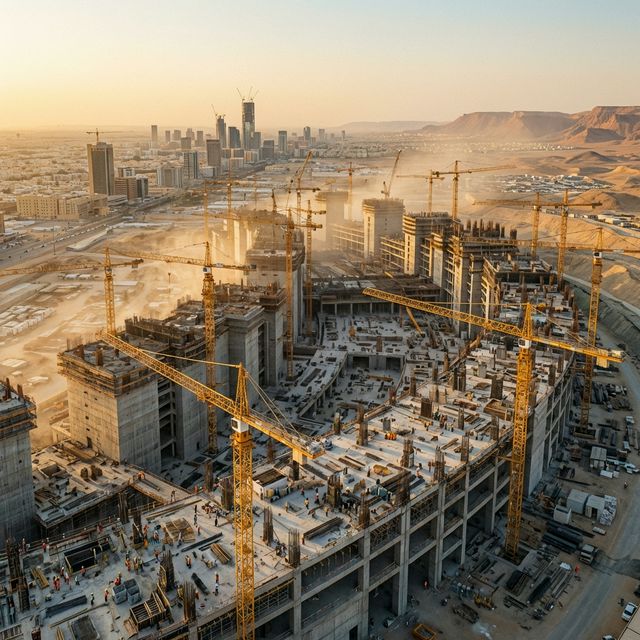
An owner who visits a Saudi site twice a year usually spends the visit being shown things. Here is how to spend it finding things out instead.
A visit by an overseas owner is a scarce resource, and the contractor will plan it for you if you do not. The pattern is familiar: a tidy site, a presentation, a good lunch and a walk past the most complete area. A useful visit is planned around the questions the reports could not answer and the documents you cannot verify remotely.
Why these keep happening
These mistakes come from letting the visit be hospitality rather than work. The contractor is not being dishonest by showing you the best part of the site. They are behaving rationally, and it is your agenda that has to impose a different shape on the day.
1. Arriving without a written agenda
The visit feels like a relationship exercise, so a formal agenda seems unfriendly.
- Avoid it by: Send an agenda a week ahead listing the areas to inspect, the documents to review and the decisions to close.
- Proof it is closed: A written agenda issued in advance and a short note of outcomes issued afterwards.
What it costs you: You leave with impressions instead of answers, and the same questions remain open for another quarter.
2. Walking only where you are led
The route is prepared, and deviating from it feels rude in a context where hospitality matters.
- Avoid it by: Choose your own route from the programme, prioritising activities that are critical or reported as slipping.
- Proof it is closed: A visit note listing the specific zones inspected and their reported status.
What it costs you: You never see the areas that are behind, which are precisely the areas that will determine your completion date.
3. Not asking to see documents on site
Paperwork feels like something to review from a desk, not during a visit.
- Avoid it by: Ask to see concrete test results, material certificates, inspection records and the site diary for a month you choose.
- Proof it is closed: A record of which documents you inspected and any gaps found.
What it costs you: You miss the chance to test whether the records that should exist actually do, which is impossible to verify by email.
4. Meeting only the contractor management
The commercial manager hosts the visit and the site engineers stay working.
- Avoid it by: Spend part of the visit with the site engineer, the supervising engineer alone, and if possible a key subcontractor.
- Proof it is closed: Separate conversations recorded in your visit note, including one without the contractor present.
What it costs you: You hear the polished version, and you miss the people who could tell you what is actually holding work up.
5. Making decisions on site without recording them
You are there, the question is in front of you, and a verbal answer moves things forward.
- Avoid it by: Note every decision taken during the visit and confirm them all in one written summary before you fly home.
- Proof it is closed: A dated summary of decisions issued within a day of the visit.
What it costs you: Your approval becomes a variation you never priced, and the record of it is their meeting note.
6. Visiting at the wrong point in the programme
Travel is planned around your own diary rather than the project.
- Avoid it by: Time visits to coincide with hold points, the start of finishes, or the period when major approvals are needed.
- Proof it is closed: Visit dates chosen from the programme and recorded against the activities they cover.
What it costs you: You arrive when nothing is being concealed and nothing is being decided, so the visit cannot change anything.
A short check before you sign
- Was an agenda issued in advance, listing areas, documents and decisions?
- Did you choose the walking route from the programme yourself?
- Did you inspect original records on site, not summaries?
- Did you speak to the supervising engineer without the contractor present?
- Was every decision taken during the visit confirmed in writing before you left?
If it has already happened
If previous visits have produced nothing but goodwill, change the structure of the next one rather than complaining about the last. Tell the contractor in advance that the visit is a working inspection, name the documents you will examine, and bring your own engineer with you for at least one day. A single visit conducted this way resets expectations for the rest of the project, and it usually surfaces one or two issues that were never going to appear in a report.
Domira designs, builds and manages projects across Saudi Arabia for owners who are based abroad: land appraisal, feasibility, design, construction, handover and asset management under one accountable contract. Send us the plot or the brief and Domira will put the numbers in front of you before you commit.
Frequently Asked Questions
How often should an overseas owner visit their construction project?
Frequency matters less than timing. Two well timed visits are worth more than four convenient ones. Aim for one early, around the first major concealed work, one at the transition into finishes when the specification decisions arrive, and one before handover while retention is still held. If you can only make one, make it the transition into finishes, because that is where most of the remaining money is committed.
What should an owner look for when walking a construction site?
Look at the areas that are behind rather than the areas that are finished, at whether concealed work has signed inspection records, at storage and protection of materials, at whether the number of workers matches what is reported, and at housekeeping, which correlates strongly with quality. Also look at the site notice board and the records, since a well run site keeps its documents where they can be seen.
Should I bring my own engineer to a site visit if I already pay a supervising engineer?
If you have a supervising engineer reporting to you independently, they are the person to walk the site with, and bringing a third party can undermine them. If your only technical presence is connected to the contractor or the designer, then yes, bring an independent engineer at least once, and be clear that the purpose is verification rather than a criticism of anyone.
Have a Property Question?
Domira can help you navigate property, financing and investment decisions in Saudi Arabia. Speak with our team for an initial consultation.

