
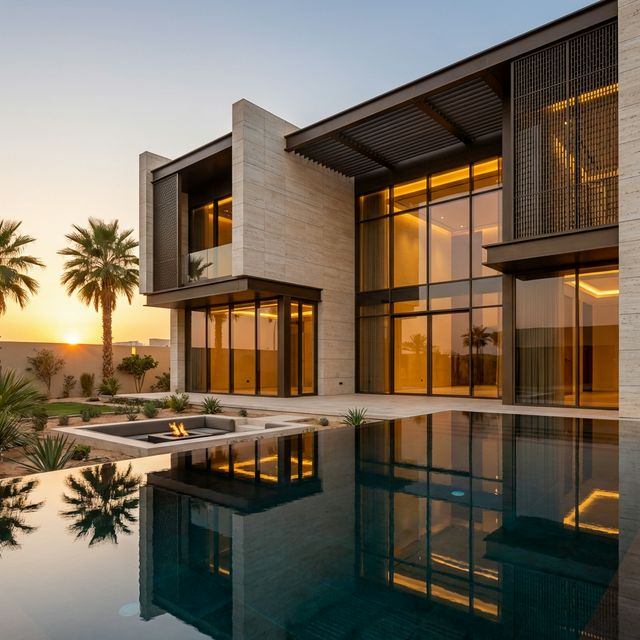
Designing a serviced apartment building in Saudi Arabia around the operation that will run it: reception, housekeeping routes, laundry, metering, licensing and the fit-out standard.
A serviced apartment building is a hospitality operation wearing residential clothing. Guests arrive at all hours, rooms are cleaned between stays, linen moves through the building daily and somebody has to be at a desk. None of that fits a standard apartment block plan, and none of it can be added later. The sequence below designs the building around the operation rather than the other way round.
Before stage one
You are ready when you know who operates the building and what service they will deliver. A self-operated building with a small team needs different back-of-house space from one run by a brand with its own standards. Decide the operating model first, because it sets reception size, laundry location, storage, staff facilities and even the position of the service lift.
- The operating model chosen: self-managed, third-party operator, or a branded agreement.
- Target guest profile and average length of stay, because a seven-night guest and a three-month guest need different unit layouts.
- A licensing route confirmed for short-stay accommodation, checked with the relevant authority and a licensed adviser.
- Booking channel strategy, since commission levels change the revenue model before the building is drawn.
- A capital limit that includes furniture, fittings, equipment and pre-opening costs, not construction alone.
Stage 1: Fix the operating model and service level
Write down what the operation delivers: check-in hours, cleaning frequency, linen change, breakfast or no breakfast, and whether there is a guest kitchen or only in-unit cooking. Each line generates space, staff and equipment. A building designed for daily housekeeping and one designed for weekly cleaning are physically different.
- Deliverable: A service specification with staffing levels and the back-of-house space each service requires.
- Owner: Owner with the operator or operating adviser.
- Approval gate: Signed before the architect produces a floor plan.
Stage 2: Plan back of house before front of house
Reception, luggage store, housekeeping stores on each floor, a linen route that never crosses the guest route, laundry, staff changing and rest space, waste holding and a service lift. These are the spaces owners delete to add another unit, and their absence is what makes an operation expensive to run forever.
- Deliverable: A back-of-house plan with the linen and waste routes drawn from arrival to disposal.
- Owner: Architect with the operator.
- Approval gate: Owner approval that no back-of-house area has been traded for a unit.
Stage 3: Design the unit around the length of stay
Short stays need storage for a suitcase, a good bathroom and a kettle. Longer stays need a workable kitchen, a wardrobe that holds a month of clothes, a desk and somewhere to dry laundry. Mixing the two in one building is possible if you design two unit types deliberately rather than compromising on one.
- Deliverable: Unit type drawings with furniture layouts drawn to scale, not indicated.
- Owner: Interior designer with the operator.
- Approval gate: A mocked-up unit accepted before the repeat fit-out begins.
Stage 4: Resolve metering, cooling and acoustics
Guests do not pay utility bills, so the building pays them and cooling runs whether the unit is occupied or not unless it is controlled centrally. Key-linked or occupancy-linked control saves real money. Acoustics matter more than in a residential block because neighbours change weekly and corridor noise arrives at every hour.
- Deliverable: A services strategy covering occupancy-linked cooling control, metering and acoustic separation.
- Owner: Services engineer with the operator.
- Approval gate: Approved before tender, with the annual energy implication quantified.
Stage 5: Budget furniture, fittings and equipment as a real package
The furniture, fittings and equipment package in a serviced building is a substantial share of capital and it wears out on a cycle, unlike a residential fit-out. Specify it as a schedule with replacement intervals, then set aside a reserve from opening day rather than discovering the cycle in year four.
- Deliverable: A furniture, fittings and equipment schedule with unit quantities, costs and a replacement reserve rate.
- Owner: Owner with the operator.
- Approval gate: Package priced and approved before construction reaches fit-out stage.
Stage 6: Licence and prepare to open
Short-stay accommodation is licensed differently from long residential letting, and the requirements should be confirmed with the relevant authority through your adviser. Alongside licensing, the operation needs a property management system, channel connections, payment handling, staff recruitment and training, and a pre-opening budget that pays for all of it before revenue exists.
- Deliverable: Licences in place, systems live, staff hired and trained, and a pre-opening cash plan.
- Owner: Operator with the owner funding.
- Approval gate: No opening date announced until licences and systems are confirmed.
Stage 7: Open in a controlled way and measure
Open on a limited inventory, take real guests, and fix what the first month reveals about cleaning times, laundry capacity and check-in flow. Then release the rest of the building. A full opening with untested processes generates the reviews that set your rate for the next year.
- Deliverable: A soft opening report with operational fixes closed before full inventory release.
- Owner: Operator.
- Approval gate: Guest feedback and housekeeping timings within target before full opening.
Handovers between stages
Design to fit-out is the first fragile handover: the furniture schedule must reach the contractor with the drawings, or you will get sockets in the wrong place behind a bed that does not fit. Construction to operation is the second: the operator needs the building early enough to load systems, train staff and test housekeeping routes, so agree an access date for the operator that precedes practical completion rather than following it.
How you know it is finished
The building is working when occupancy and rate are at plan, housekeeping completes a room in the time the operation assumed, the laundry keeps up at full occupancy, and utility cost per occupied room sits inside budget. If any of those four is out, the cause is almost always a design decision taken to add a unit or save a store, and it is worth documenting for the next project.
Domira designs, builds and manages projects across Saudi Arabia for owners who are based abroad: land appraisal, feasibility, design, construction, handover and asset management under one accountable contract. Send us the plot or the brief and Domira will put the numbers in front of you before you commit.
Frequently Asked Questions
How is a serviced apartment building different from a normal apartment block?
It carries an operation. Reception, per-floor housekeeping stores, a linen route separate from guests, laundry, staff facilities, waste holding and a service lift all take space that a residential block does not need. Guests also do not pay utilities, so cooling control and metering matter financially. These requirements cannot be retrofitted once the plan is fixed.
Do serviced apartments in Saudi Arabia need a different licence from long-term rentals?
Short-stay and serviced accommodation is licensed differently from residential letting registered through Ejar, and requirements depend on the exact product and location. Confirm the applicable route with the relevant authority and take advice from a licensed adviser before you commit to a business model, because the licensing position affects both the design and the revenue plan.
How much of a serviced apartment budget goes on furniture and equipment?
Enough that it needs its own schedule and its own approval rather than an allowance. It also wears out on a cycle of a few years, unlike a residential fit-out, so set a replacement reserve as a percentage of revenue from the day you open. Owners who skip the reserve face a large unplanned spend in the year performance matters most.
Have a Property Question?
Domira can help you navigate property, financing and investment decisions in Saudi Arabia. Speak with our team for an initial consultation.

