
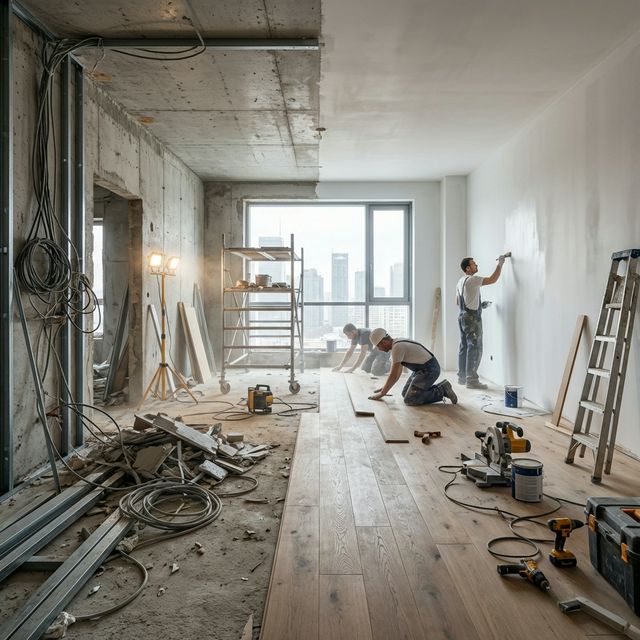
Most tired interiors are not worn out; they are dated, badly lit and poorly maintained. Here are the assumptions that turn a refresh into an unnecessary strip-out.
An interior that feels tired is usually suffering from three things at once: lighting that was never designed, finishes that have not been maintained, and a palette that places it in a particular decade. All three can often be addressed without touching the fabric, which costs a fraction of a strip-out and takes weeks rather than months. Demolition is sometimes right, but it should be a conclusion rather than a starting assumption.
How to test a claim like this
Before deciding to strip anything out, ask three questions about each element. Does it still perform, which for a wet area means it does not leak and for joinery means it still closes? Does it suit how the space is used now, which is a layout question rather than an appearance question? And is its appearance a function of the material itself or of its condition and the light falling on it? Only elements that fail the first or second question need removing. Elements that fail only the third are candidates for cleaning, refinishing, relighting or partial replacement.
Myth 1: A dated interior needs stripping back to the shell.
Reality: Stripping to the shell is the right answer when the layout is wrong, the services are at the end of their life or the wet areas are failing. It is an expensive answer to an appearance problem. Lighting that was never designed, surfaces that have lost their finish and a palette fixed in one decade can usually be addressed by relighting, refinishing and recolouring, which leaves the fabric and the services in place and takes a fraction of the time.
How to check it yourself: List the elements that actually fail on performance or layout, and price a refresh of everything else before pricing a strip-out.
Myth 2: The kitchen has to be replaced because it looks old.
Reality: A kitchen is a set of components with different lives. Carcasses often remain sound long after the doors, the worktop and the hardware have aged, and replacing doors, fronts, worktops and handles while keeping the carcasses can transform a kitchen at a far lower cost. The exception is where carcasses have swollen from water, where the layout no longer works, or where the services need to move, in which case replacement is genuinely the right route.
How to check it yourself: Open every unit and inspect the carcass, the edges beneath the sink and the hardware, then decide component by component.
Myth 3: Old bathrooms always have to be gutted.
Reality: Sometimes they do, particularly where there is evidence of water tracking or where the drainage positions do not suit the intended layout. But a bathroom whose waterproofing is sound and whose tiling is intact can often be substantially improved by replacing sanitaryware, brassware and the shower screen, renewing sealant and grout, improving the ventilation and relighting the room. Removing sound tiling to replace it with similar tiling is a large cost for a modest change.
How to check it yourself: Establish whether the waterproofing and drainage are performing before deciding, since that is what distinguishes a refresh from a rebuild.
Myth 4: Replacing the floor is the quickest way to update a space.
Reality: It is one of the most disruptive, because a floor sits under the skirtings, the door thresholds, the joinery plinths and often the sanitaryware, so replacing it reaches into several other trades. If the existing floor is sound and merely dull, cleaning, refinishing or resealing may restore it, and a large rug may do more for the room than a new floor would. Replacement is justified when the finish has failed, the substrate is unsound or the material is wrong for the exposure.
How to check it yourself: Have a small area professionally cleaned and refinished as a test before committing to replacing the whole floor.
Myth 5: Lighting is a finishing touch rather than a structural part of a refurbishment.
Reality: Lighting is frequently the single change that makes the largest difference to a tired interior, and it is often the cheapest significant intervention available. Many dated interiors have one grid of fittings on one switch, producing a flat, unflattering condition at all times. Adding circuits, splitting the controls, changing colour temperature to something consistent and aiming light at walls and faces rather than at the floor can change how a space feels without altering a single surface.
How to check it yourself: Before any demolition, test a temporary lighting arrangement in the principal room at night and judge the space again.
Myth 6: A refurbishment in an occupied property can be done room by room without planning.
Reality: It can be phased, but phasing needs more planning rather than less. Dust travels, services serve more than one room, and a trade that has to return three times costs more than one that works continuously. Wet trades in particular are hard to isolate. A phased refurbishment needs a sequence, a dust containment strategy, a decision about which services can be isolated and when, and an acceptance that the total cost will exceed an uninterrupted programme.
How to check it yourself: Write the phase sequence and identify which services must be isolated for each phase before committing to working around occupation.
What this changes in your decision
- Survey the existing interior element by element and record what fails on performance, what fails on layout and what fails only on appearance.
- Test lighting changes before any demolition, since relighting is often the cheapest significant improvement available.
- Price a refresh and a strip-out against the same brief, so the comparison is explicit rather than assumed.
- Investigate the condition of waterproofing, drainage and joinery carcasses before deciding the scope of any wet area or kitchen work.
- Confirm what approvals any proposed work requires with the relevant municipal and civil defence authorities, bearing in mind that requirements are revised periodically, and take legal advice from a licensed adviser where the property is leased or shared, since alterations may need consent.
Domira designs and delivers interiors as part of the building, not after it: the finishing schedule, the joinery and the services coordination that decide whether a space looks built or assembled. Share the space and Domira will tell you what it would specify and what it would leave out.
Frequently Asked Questions
Should I refurbish or strip out a tired interior?
Strip out where the layout is wrong, the services are at the end of their life or the wet areas are failing. Refresh where the complaint is appearance, since lighting, refinishing and recolouring can transform a space at a fraction of the cost and in weeks rather than months. Survey element by element and separate what fails on performance from what fails only on appearance.
Can I replace just the kitchen doors and worktop?
Often yes, and it is one of the better value interventions available, provided the carcasses are sound and the layout still works. Inspect every carcass, particularly the edges beneath the sink and alongside any appliance that uses water, and check the hardware. Where carcasses have swollen or the services need to move, replacement becomes the sensible route instead.
What makes the biggest difference when updating an interior?
Lighting, in most cases, and it is often the least expensive significant change. Many dated interiors have a single grid of fittings on one switch, which produces one flat condition at all hours. Adding circuits, splitting the control, making the colour temperature consistent and aiming light at walls and faces rather than at the floor changes how a space feels without altering any surface.
Is it realistic to refurbish while living in the property?
It is possible with planning and it costs more than an uninterrupted programme. Dust travels further than people expect, services often serve more than one room so isolation affects areas not being worked on, and trades that return repeatedly charge for it. Write the phase sequence, decide the dust containment strategy and identify the service isolations before committing to the approach.
Have a Property Question?
Domira can help you navigate property, financing and investment decisions in Saudi Arabia. Speak with our team for an initial consultation.
