
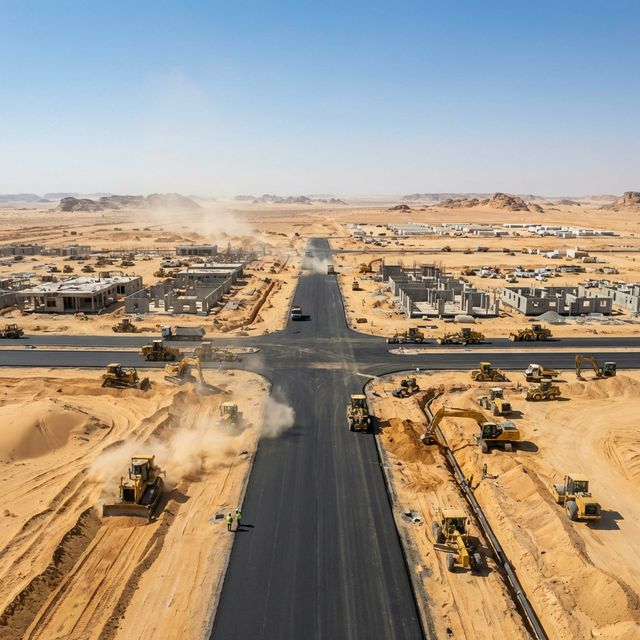
The stages for a foreign manufacturer localising production in Saudi Arabia, from demand proof and site choice to local content certification and first output.
Localising manufacturing in Saudi Arabia starts with proving that local buyers, especially government-linked ones, will prefer a Saudi-made product, then choosing an industrial site, securing an industrial licence and building a supply chain that earns local content credit. The Ministry of Industry and Mineral Resources, MODON and the Local Content and Government Procurement Authority each play a part. The sequence below keeps demand, site and compliance moving together.
Before stage one
Before any site visit, know which product lines you would make locally, which customers have asked for local supply, and how local content is measured in their procurement. A factory built for a demand that exists only in a policy document is the most expensive mistake in this sector.
- Named buyers or tenders that reward local content, with evidence from their procurement documents.
- A product and process plan showing what would be made, assembled or sourced locally.
- An estimate of power, water, gas and land requirements.
- Investor registration with MISA and a company structure suited to industrial activity.
Stage 1: Validate demand and local content value
Study how target buyers score local content in tenders, including the preference mechanisms applied through Etimad and by large state-linked companies.
- Deliverable: A demand map with buyers, volumes they indicate and the local content level needed to win.
- Owner: Investor with a market adviser.
- Approval gate: At least one credible buyer relationship before choosing a site.
Stage 2: Select the industrial location
Compare MODON industrial cities, the Royal Commission cities of Jubail and Yanbu, special economic zones and private land on utilities, logistics, labour and incentives.
- Deliverable: A shortlisted site with utility capacity confirmed in writing.
- Owner: Investor with a site selection consultant.
- Approval gate: Utility availability and timelines confirmed, not assumed.
Stage 3: Obtain the industrial licence
Apply to the Ministry of Industry and Mineral Resources for the industrial licence, presenting the product, process, capacity and environmental information required.
- Deliverable: Industrial licence or a clear list of outstanding conditions.
- Owner: Investor with a licensing specialist.
- Approval gate: Licence conditions understood before the factory design is frozen.
Stage 4: Arrange finance and incentives
Explore industrial financing from the Saudi Industrial Development Fund and commercial banks, and ask about incentives linked to the zone or programme.
- Deliverable: A financing plan with conditions and drawdown linked to construction milestones.
- Owner: Chief financial officer.
- Approval gate: Funding confirmed for construction plus working capital.
Stage 5: Design and build the plant
Design the building around the production layout, obtain building and environmental permits, then construct and install equipment.
- Deliverable: Completed plant with commissioning records for each line.
- Owner: Engineering contractor.
- Approval gate: Civil defence and environmental approvals obtained before production.
Stage 6: Build the workforce and supply base
Recruit and train Saudi and expatriate staff under Nitaqat requirements, qualify local suppliers for materials and components, and document local sourcing.
- Deliverable: A trained team and approved supplier list with local content records.
- Owner: Operations and procurement heads.
- Approval gate: Nitaqat band acceptable for hiring and visas.
Stage 7: Certify local content and start supply
Have the local content level assessed through the mechanism the Local Content and Government Procurement Authority recognises, and register with buyers as a local supplier.
- Deliverable: Local content certificate and supplier registrations.
- Owner: Commercial director.
- Approval gate: First orders delivered to specification.
Handovers between stages
The fragile link is between the demand study and the factory specification. Buyers often want a product adapted to Saudi standards, climate or their own specifications, and the plant must be designed for that version. Keep a buyer engineer involved during design reviews so the first production run is the product they will buy.
How you know it is finished
Localisation is real when the plant is licensed and producing, the product is qualified with buyers, the local content level is certified and sustained, and the workforce meets Saudisation requirements without depending on temporary exceptions.
If a Vision 2030 programme or market trend is shaping your investment case, Domira can test it against real land, construction costs and local demand in the city you are considering before you commit capital.
Frequently Asked Questions
What is local content in Saudi Arabia?
Local content is the share of spending on a product or contract that stays in the Saudi economy through local labour, goods, services, assets and training. The Local Content and Government Procurement Authority sets how it is measured and how preferences apply in government procurement. Rules and thresholds are updated, so read the current regulations for your sector.
Do I need an industrial licence to open a factory in Saudi Arabia?
Manufacturing activities generally require an industrial licence from the Ministry of Industry and Mineral Resources, in addition to company registration and other permits such as environmental and civil defence approvals. Requirements depend on the product and process, so confirm them with the ministry early in planning.
Which industries does Saudi Arabia want to localise?
The National Industrial Development and Logistics Program and the national industrial strategy emphasise sectors such as automotive, pharmaceuticals, food, chemicals, machinery, building materials, renewable energy equipment and military industries. Priorities and incentives change, so check current programme publications and ask the Ministry of Industry which sectors carry support.
Have a Property Question?
Domira can help you navigate property, financing and investment decisions in Saudi Arabia. Speak with our team for an initial consultation.
