
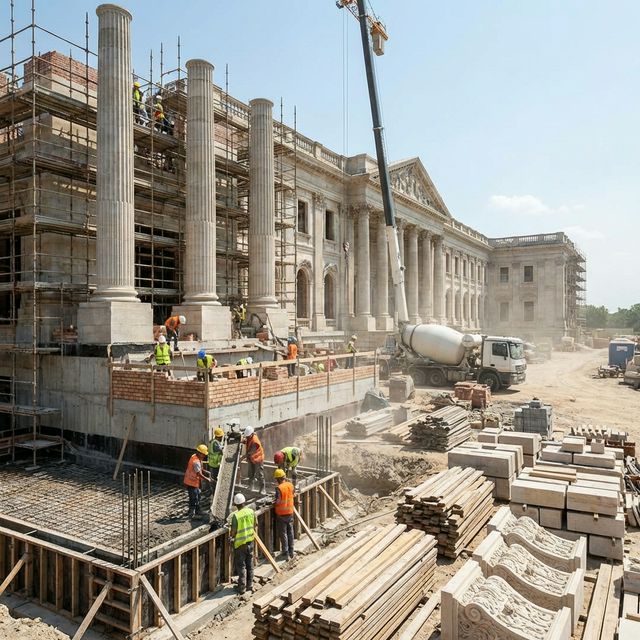
A fixed sum for a defined scope, or payment for the quantities actually built: how each pricing basis behaves when the design or the ground moves.
Lump sum and remeasured contracts both start from a bill of quantities and diverge in what happens next. Under a lump sum, the price stands unless the scope changes. Under a remeasured contract, the quantities are measured as built and the account moves with them. The right choice depends on how complete your design is and who is better placed to carry quantity risk.
Lump sum at a glance
The contractor prices the documents and undertakes the works for a fixed sum, carrying the risk that the quantities are more than it measured. The account changes for variations, provisional sums, any price adjustment provision and prolongation, but not because a quantity was understated. It gives you a number you can take to a lender, provided the design was complete when you tendered.
Remeasured at a glance
The bill quantities are treated as an estimate and the works are measured as constructed, with payment at the tendered rates. It suits work where quantities genuinely cannot be fixed in advance, and it removes the contractor need to price quantity risk. It also means your final cost is not known until the measurement is complete, and it requires a disciplined cost function throughout.
Certainty of final cost
Lump sum: High for the defined scope, subject to variations and provisional sums.
Remeasured: Low until the final measurement, which arrives near the end of the project.
Who carries quantity risk
Lump sum: The contractor, which prices an allowance for it into the rates.
Remeasured: The owner, who pays for whatever is actually built.
Price level at tender
Lump sum: Usually higher, because the risk allowance is inside the price.
Remeasured: Usually lower on rates, since quantity risk is not being priced.
Administration effort
Lump sum: Lighter, with valuations against progress and a shorter final account.
Remeasured: Heavier, requiring continuous measurement and agreement of quantities.
Suitability for an incomplete design
Lump sum: Poor, since gaps become variations at rates you did not compete.
Remeasured: Better, because the mechanism expects quantities to move.
Disputes it tends to produce
Lump sum: Arguments about whether something was included in the scope.
Remeasured: Arguments about measurement, rates for changed conditions and the final account.
What a lender prefers
Lump sum: Generally a fixed sum it can rely on for the facility.
Remeasured: Usually requires additional comfort, since the final figure is open.
When lump sum wins
- A complete design at tender, with few unknowns left in the documents.
- A funding case that requires a fixed contract sum.
- A building type the market prices routinely and confidently.
- An owner abroad who needs simplicity in monthly administration.
- A project where you would rather pay a risk premium than manage measurement.
When remeasured wins
- Substantial groundwork or excavation where volumes depend on what is found.
- A design that must proceed to site before every quantity is settled.
- Refurbishment or work against an existing structure.
- A project where you want to avoid paying a premium for quantity uncertainty.
- An owner with a cost consultant measuring on site throughout.
How to decide
Use a lump sum wherever the design is complete enough to measure reliably, which is the position you should be aiming for anyway, and accept the risk premium as the price of certainty. Use remeasurement for the elements that genuinely cannot be fixed, most often substructure and earthworks, rather than for the whole contract. A lump sum for the superstructure and finishes with a remeasured substructure is a common and sensible middle position, and a licensed adviser should confirm the drafting works.
Decide on two pieces of evidence: an honest assessment of design completeness at tender, section by section, and whether you have a cost function able to measure on site every month. If the design has gaps and you have no measurement capability, neither basis will protect you, and the answer is to finish the design before tendering rather than to choose a contract that tolerates the gap.
Domira designs, builds and manages projects across Saudi Arabia for owners who are based abroad: land appraisal, feasibility, design, construction, handover and asset management under one accountable contract. Send us the plot or the brief and Domira will put the numbers in front of you before you commit.
Frequently Asked Questions
What is a remeasured construction contract?
It is a contract where the bill quantities are treated as estimates and payment is made for the quantities actually constructed, at the rates tendered. It suits work whose volumes cannot be fixed in advance, such as excavation. The trade-off is that your final cost is not known until measurement is complete, so it needs disciplined cost control throughout.
Can part of a contract be lump sum and part remeasured?
Yes, and it is often the most sensible arrangement: remeasure the substructure and earthworks where quantities depend on ground conditions, and take a lump sum for the superstructure and finishes where the design is settled. The drafting has to make the boundary between the two unambiguous, so have a licensed adviser review it before signature.
Which contract type gives the lowest final cost?
Neither reliably, because the difference is where risk sits rather than how much work costs. A lump sum includes a premium for quantity risk; a remeasured contract omits that premium and exposes you to the actual volumes. The bigger determinant of final cost is design completeness at tender, which affects both bases equally.
Have a Property Question?
Domira can help you navigate property, financing and investment decisions in Saudi Arabia. Speak with our team for an initial consultation.

