
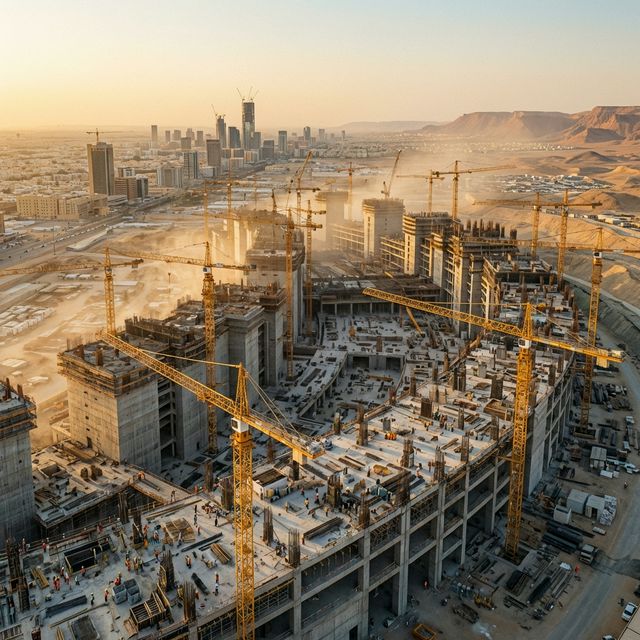
One contract for design and construction, or design first and then competitive tender: how the two routes differ on price certainty, control and risk.
The procurement route decides who carries design risk, when you get a firm price and how much control you keep over what the building is. Design and build hands one contractor both jobs; traditional procurement completes the design first and then invites competitive prices for construction. For an owner abroad the choice is mostly about how much you can supervise and how firmly you want the specification fixed.
Design and build at a glance
One contractor is responsible for both completing the design and constructing the building, usually working from the owner requirements and a concept design. You get a single point of responsibility and, if the requirements are well written, an early firm price. In exchange, the contractor controls design development, and every specification decision it makes is one you did not make.
Traditional procurement at a glance
The owner appoints designers, completes the design and specification, then invites contractors to price the same documents competitively. You keep control of what is built and you get comparable bids on a defined scope. The trade-off is that design risk stays with you, the programme is sequential rather than overlapped, and gaps in the documents become variations.
When you get a firm price
Design and build: Earlier, because the contractor prices against requirements rather than a complete design.
Traditional procurement: Later, after the design is finished and tenders have been returned and normalised.
Who carries design risk
Design and build: The contractor, for the design it develops, subject to what the requirements actually say.
Traditional procurement: The owner, through the design team appointments and their professional indemnity.
Control of specification
Design and build: Weaker, since the contractor chooses within the requirements to suit its cost base.
Traditional procurement: Stronger, because you specify before anyone prices and every bid covers the same thing.
Comparability of bids
Design and build: Harder, as each bidder proposes a slightly different building.
Traditional procurement: Straightforward, because all bidders price identical documents.
Exposure to variations
Design and build: Lower for design development, higher for anything the requirements failed to state.
Traditional procurement: Higher where documents are incomplete, since gaps are instructed at contract rates.
Programme
Design and build: Shorter overall, because design completion and early construction can overlap.
Traditional procurement: Longer, since tendering follows a completed design rather than running alongside it.
What it demands of the owner
Design and build: A rigorous requirements document written before award, and discipline about changes afterwards.
Traditional procurement: Active management of designers and a complete document set before tender.
When design and build wins
- An owner who cannot supervise closely and needs one accountable party.
- A conventional building type where the market knows how to deliver it.
- A programme where design and early construction need to overlap.
- A project where price certainty matters more than fine control of specification.
- A scheme with a well developed employer requirements document to hold the contractor to.
When traditional procurement wins
- A project where specification and appearance are central to value.
- An owner with a development manager or cost consultant to run the process.
- A scheme where competitive pricing on a complete design is the priority.
- A building with unusual requirements that need the owner design team to resolve.
- A market position where you want to test several contractors on identical documents.
How to decide
Choose design and build if you cannot supervise the project closely and you are willing to invest in a detailed employer requirements document, because that document is the only control you retain. Choose traditional procurement if specification drives value, if you have a development manager and cost consultant in place, and if you want competitive prices on an identical scope. The worst outcome is design and build with vague requirements, which gives away control without buying certainty.
Base the decision on two honest assessments. First, how complete can your requirements document be before award, because a thin one converts design and build into a series of arguments about what was implied. Second, whether you have the capacity to manage a design team and a tender process from another country, or whether you need one party responsible for everything. Ask a licensed adviser to review whichever contract form you adopt before signature.
Domira designs, builds and manages projects across Saudi Arabia for owners who are based abroad: land appraisal, feasibility, design, construction, handover and asset management under one accountable contract. Send us the plot or the brief and Domira will put the numbers in front of you before you commit.
Frequently Asked Questions
What is design and build in construction?
It is a procurement route where a single contractor takes responsibility for completing the design and constructing the building, usually working from the owner requirements and a concept design. You get one accountable party and an earlier firm price, and you give up control of design development, so the quality of the requirements document determines what you actually receive.
Does design and build cost less than traditional procurement?
Not reliably. It can shorten the programme, which saves finance cost, and it reduces your exposure to design development variations. It can also produce a lower specification within the same price, because the contractor optimises to its own cost base. Compare on what you receive for the money rather than on the contract sum alone.
What is an employer requirements document?
It is the owner statement of what the finished building must be and do, used in design and build to hold the contractor to a standard: areas, performance, specification levels, quality benchmarks, what is included and what is excluded. It replaces the detailed design as your instrument of control, so vague requirements mean a building defined by somebody else.
Have a Property Question?
Domira can help you navigate property, financing and investment decisions in Saudi Arabia. Speak with our team for an initial consultation.

